5 Simple Ways to Track Your Expenses (Budget Tips)
 By Matthew Harman — Matthew has been navigating UK personal finance for over 30 years, from first mortgages to ISA strategies, and founded BudgetSense to share what actually works.
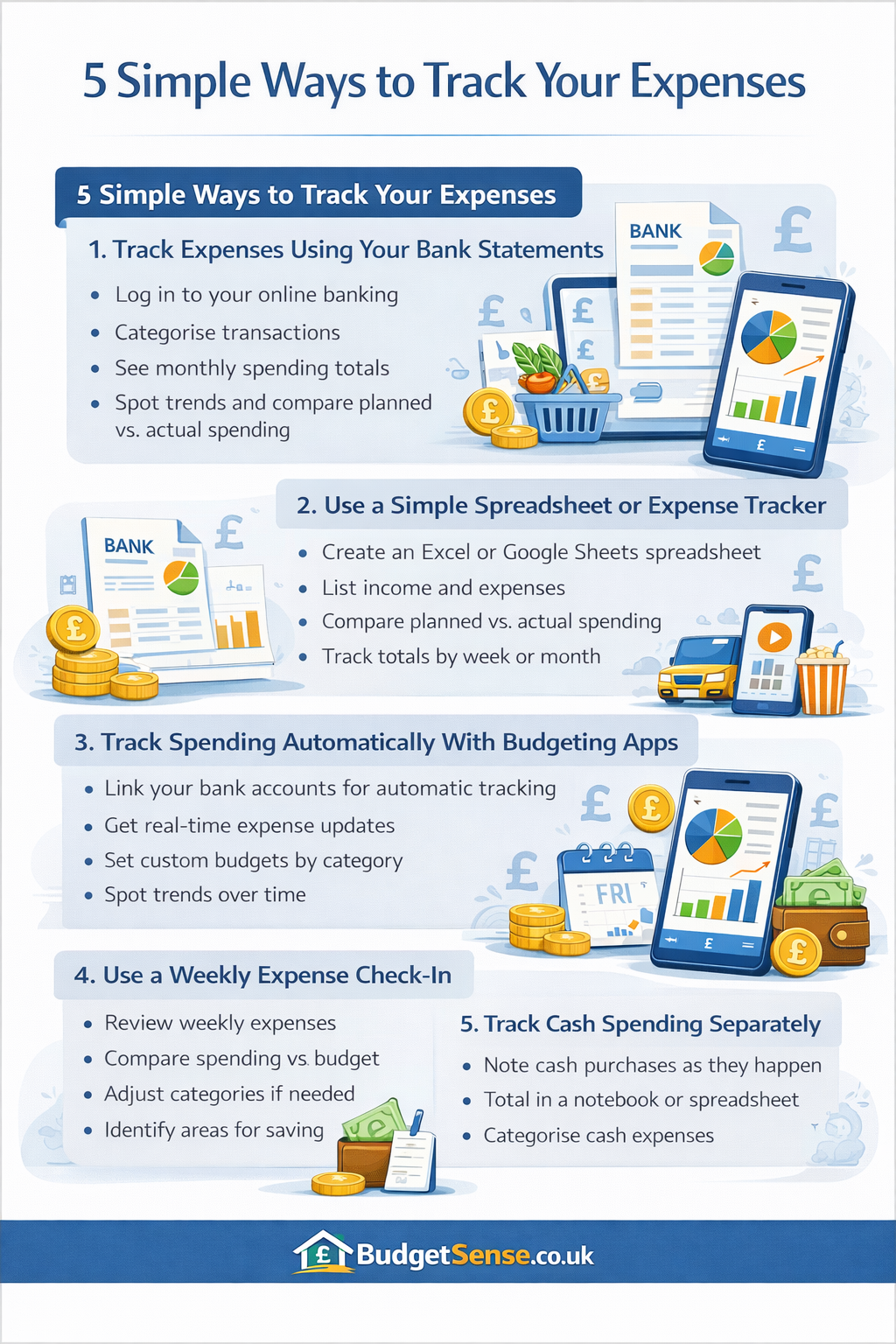
Visual summary of key points from '5 Simple Ways to Track Your Expenses (Budget Tips) | BudgetSense'
Essential UK Budgeting & Personal Finance Guides for 2026
Discover practical tips, tools, and strategies to manage your money, save effectively, and stay on top of your finances.
Check out our key articles: How to Create a Simple Budget, How to Save £500 in 3 Months, Understanding Credit Scores in the UK.
5 Simple Ways to Track Your Expenses
If you want to save money consistently, tracking your expenses is one of the most important habits you can build. Many people on a UK budget feel like their money disappears without knowing where it goes. Expense tracking gives you clarity, control, and confidence — without needing complicated systems.
This guide covers five simple, realistic ways to track your expenses in the UK. Whether you prefer apps, spreadsheets, or low-effort check-ins, there’s a method here you can stick to long term.
1. Track Expenses Using Your Bank Statements
Your bank statements are one of the easiest ways to start tracking spending. Most UK banks now categorise transactions automatically through online banking or mobile apps.
Start by reviewing the last one to three months and grouping spending into categories such as:
- Food and groceries
- Bills and utilities
- Transport
- Subscriptions
- Lifestyle and entertainment
This method is quick, requires no daily effort, and often highlights spending patterns immediately — especially forgotten subscriptions or frequent small purchases.
2. Use a Simple Spreadsheet or Expense Tracker
If you like structure, a basic spreadsheet is a reliable way to track expenses on a UK budget. You don’t need anything complicated — just columns for date, amount, category, and notes.
Using a spreadsheet helps you:
- See monthly spending totals clearly
- Compare planned versus actual spending
- Spot trends over time
Updating it once or twice a week is enough to stay in control and supports long-term efforts to save money consistently.
3. Track Spending Automatically With Budgeting Apps
Budgeting apps are one of the most popular ways to track expenses in the UK because they automate most of the work. These apps securely link to your bank accounts and categorise spending for you.
Key benefits include:
- Real-time expense tracking
- Visual charts and spending summaries
- Alerts when you overspend in a category
If you want tools that combine expense tracking with saving features, see Best Budgeting Apps UK with Interest Tracking for UK-focused options.
4. Use a Weekly Expense Check-In
You don’t need to track every transaction daily to stay in control. A weekly expense check-in is often more sustainable, especially for busy households.
Once a week:
- Review recent transactions
- Categorise spending quickly
- Compare totals to your weekly budget
This approach prevents burnout and helps keep spending aligned with your goals without becoming overwhelming.
5. Track Cash Spending Separately
Cash spending is easy to forget, which is why it often breaks budgets. If you still use cash, tracking it separately is essential.
Simple ways to track cash include:
- Keeping receipts in an envelope
- Logging cash spending in your phone notes
- Using a cash-only category in your tracker
Treating cash like a mini budget keeps it visible and prevents accidental overspending.
Summary
Tracking your expenses doesn’t need to be complicated to be effective. Whether you use bank statements, spreadsheets, apps, or weekly reviews, the most important thing is consistency.
Once you know where your money is going, budgeting becomes easier and saving becomes more predictable. Expense tracking is the foundation of every successful UK budget.
Next step: Choose one method today and try it for the next seven days. Small awareness changes now can dramatically improve your ability to save money consistently.
FAQs
- Do I need to track every expense? → No, focus on high-impact categories first.
- Are budgeting apps safe in the UK? → Yes, reputable apps use bank-level security.
- How often should I review spending? → Weekly or monthly reviews work best.
- Is tracking expenses time-consuming? → Not if you choose a simple method.
- Will tracking really help me save money? → Yes, awareness leads to better decisions.