Emergency Fund Tips UK When Broke | BudgetSense.co.uk
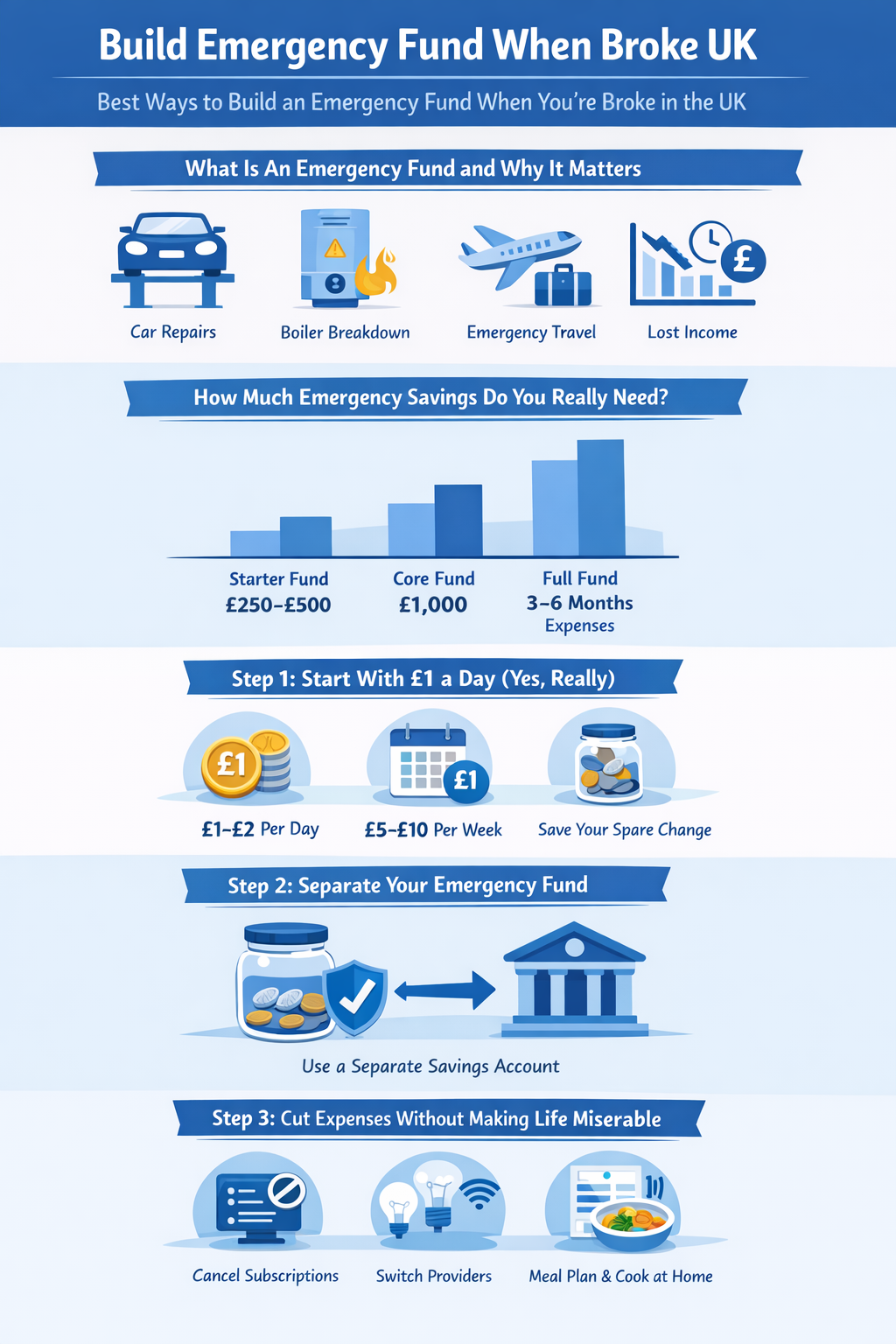
Visual summary of key points from 'Emergency Fund Tips UK When Broke | BudgetSense.co.uk'
Essential UK Budgeting & Personal Finance Guides for 2025
Discover practical tips, tools, and strategies to manage your money, save effectively, and stay on top of your finances.
Check out our key articles: How to Create a Simple Budget, How to Save £500 in 3 Months, Understanding Credit Scores in the UK.
Best Ways to Build an Emergency Fund When You’re Broke in the UK
Building an emergency fund UK residents can rely on might feel impossible when money is tight. If you’re living paycheque to paycheque, facing rising bills, or dealing with irregular income, saving can seem out of reach. The good news is that even small, realistic steps can help you create a financial safety net over time.
This guide focuses on practical, no-nonsense ways to save money when broke in the UK — without guilt, unrealistic targets, or cutting out everything you enjoy.
What Is an Emergency Fund and Why It Matters
An emergency fund is money set aside to cover unexpected expenses, such as:
- Car repairs or MOT failures
- Boiler breakdowns
- Emergency travel
- Loss of income or reduced hours
Without an emergency fund UK households often rely on overdrafts, credit cards, or high-interest loans. Even a small buffer can prevent short-term problems turning into long-term debt.
How Much Emergency Savings Do You Really Need?
Many experts recommend 3–6 months of expenses, but that target can feel overwhelming when you’re broke. A better approach is to build in stages.
| Stage | Target Amount | Purpose |
|---|---|---|
| Starter fund | £250–£500 | Small emergencies and urgent bills |
| Core fund | £1,000 | Major repairs or short income gaps |
| Full fund | 3–6 months of expenses | Job loss or long-term disruption |
If you’re broke, focus only on the starter fund. Reaching £300–£500 is already a big financial win.
Step 1: Start With £1 a Day (Yes, Really)
The fastest way to fail is setting unrealistic saving goals. Instead, aim for what’s sustainable:
- £1–£2 per day
- £5–£10 per week
- Loose change rounded up from spending
At £1 a day, you’ll save £365 a year — enough to handle most unexpected costs without panic.
Step 2: Separate Your Emergency Fund From Spending Money
Your emergency fund should be out of sight and out of mind. Use:
- A separate easy-access savings account
- A digital savings pot (Monzo, Starling, Chase)
- A basic savings account with no card access
This creates a mental barrier that reduces temptation. If you struggle to save consistently, see our guide on How to Save Money Consistently on a UK Budget.
Step 3: Cut Expenses Without Making Life Miserable
Saving money when broke in the UK doesn’t mean extreme deprivation. Focus on high-impact, low-pain changes:
- Cancel unused subscriptions
- Switch energy or broadband providers
- Lower mobile phone plans
- Meal plan 3–4 days per week
Redirect any savings straight into your emergency fund before you get used to spending it.
Step 4: Use “Found Money” for Your Emergency Fund
Found money is income you weren’t relying on. Great examples include:
- Cashback rewards
- Tax refunds
- Birthday or Christmas money
- Refunds from overpaid bills
Putting found money into your emergency fund UK savings lets you grow it faster without affecting your day-to-day budget.
Step 5: Automate Even the Smallest Amount
Automation removes willpower from the equation. Set up:
- Weekly £5 standing orders
- Round-up features on debit card spending
- Payday transfers, even if tiny
If you’re unsure where to find room in your budget, follow our Step-by-Step Guide to Making a Monthly Budget Plan UK.
Step 6: Protect Your Emergency Fund
Only use your emergency fund for true emergencies — not holidays, shopping, or social plans. Ask yourself:
- Is this urgent?
- Is it unexpected?
- Is there another option?
This keeps your financial safety net intact when you really need it.
Common Mistakes to Avoid
- Trying to save too much too fast
- Keeping savings in your current account
- Giving up after one setback
- Feeling ashamed about starting small
Progress beats perfection every time.
FAQs
Can I build an emergency fund if I’m in debt?
Yes. Start with a small £300–£500 buffer while continuing minimum debt payments. This prevents new debt when emergencies happen.
Where should I keep my emergency fund?
An easy-access savings account is ideal. Avoid locking it into fixed-term accounts.
How long does it take to build an emergency fund?
It depends on income and expenses. Even 3–6 months of steady small saving can make a big difference.
Next Steps
Start today by opening a separate savings account and setting a small automatic transfer. Building an emergency fund UK households can rely on isn’t about how much you earn — it’s about consistency.
Small steps now can protect you from big financial stress later.