Investing for Beginners UK | BudgetSense.co.uk
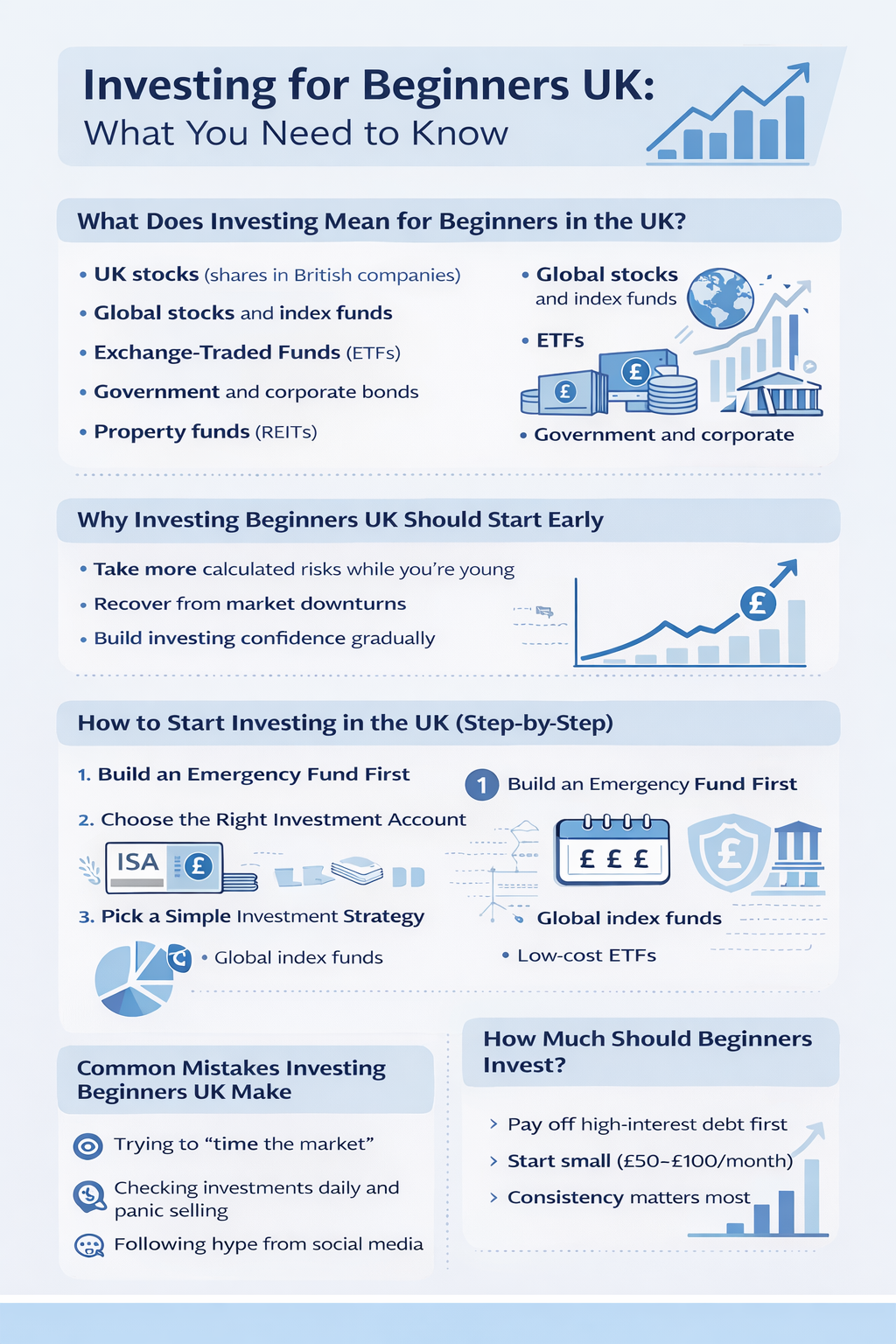
Visual summary of key points from 'Investing for Beginners UK | BudgetSense.co.uk'
Essential UK Budgeting & Personal Finance Guides for 2025
Discover practical tips, tools, and strategies to manage your money, save effectively, and stay on top of your finances.
Check out our key articles: How to Create a Simple Budget, How to Save £500 in 3 Months, Understanding Credit Scores in the UK.
Investing for Beginners UK: What You Need to Know
If you’re researching investing beginners UK advice, you’re already taking a smart first step towards building long-term wealth. With rising living costs and low savings rates, simply keeping money in a standard savings account often isn’t enough to grow your wealth over time. Learning how investing works in the UK can help you beat inflation, build financial security, and work towards goals like buying a home or retiring comfortably.
This guide explains everything you need to know about investing in the UK as a beginner — from understanding UK stocks to choosing the right account and avoiding common mistakes.
What Does Investing Mean for Beginners in the UK?
At its core, investing means putting your money into assets that have the potential to grow over time. Unlike saving, which focuses on protecting cash, investing involves some level of risk in exchange for higher potential returns.
For investing beginners UK readers, the most common investment types include:
- UK stocks (shares in British companies)
- Global stocks and index funds
- Exchange-Traded Funds (ETFs)
- Government and corporate bonds
- Property funds (REITs)
When you buy UK stocks, you’re purchasing small ownership stakes in companies listed on the London Stock Exchange. Over time, those shares may increase in value and sometimes pay dividends.
However, investing should only begin once your financial foundations are stable. If you’re carrying high-interest debt, prioritise clearing it first. Our guide on How to Pay Off Credit Card Debt Faster UK can help you reduce expensive balances before you start investing.
Why Investing Beginners UK Should Start Early
The biggest advantage beginner investors have isn’t money — it’s time.
Thanks to compound growth, even small monthly investments can grow significantly over decades. For example, investing £150 per month with an average annual return of 7% could grow to over £180,000 in 30 years.
The earlier you begin, the more time your money has to compound. This is one of the most important beginner investment tips to understand.
Starting early also allows you to:
- Take more calculated risks while you’re young
- Recover from market downturns
- Build investing confidence gradually
How to Start Investing in the UK (Step-by-Step)
1. Build an Emergency Fund First
Before investing, ensure you have at least 3–6 months of essential expenses saved in an easy-access account. This prevents you from withdrawing investments during market dips.
If you prefer lower-risk options while learning, explore 5 Low-Risk Investments UK Beginners Can Try to understand safer entry points.
2. Choose the Right Investment Account
Most investing beginners UK investors start with one of the following:
- Stocks and Shares ISA – Tax-free growth and dividends
- Lifetime ISA – For first home or retirement (with government bonus)
- Self-Invested Personal Pension (SIPP) – Long-term retirement investing
The Stocks and Shares ISA is usually the simplest starting point for beginners.
3. Pick a Simple Investment Strategy
Many beginner investors try to pick individual UK stocks straight away. While this can work, it also increases risk.
A more beginner-friendly approach includes:
- Global index funds
- FTSE 100 or FTSE All-World ETFs
- Low-cost diversified funds
This spreads your risk across hundreds or thousands of companies instead of relying on a single stock.
Common Mistakes Investing Beginners UK Make
- Trying to “time the market”
- Checking investments daily and panic selling
- Investing money needed within 1–2 years
- Following hype from social media without research
- Ignoring fees and platform charges
Remember: investing is typically a long-term strategy. Markets will rise and fall — that’s normal. Historically, diversified stock markets trend upwards over long periods.
How Much Should Beginners Invest?
There’s no perfect number. The best approach for investing beginners UK readers is to start small and stay consistent.
Even £50–£100 per month is enough to begin building momentum. Many UK platforms allow fractional investing, meaning you don’t need thousands upfront.
- Clear high-interest debt
- Build emergency fund
- Invest 10–20% of surplus income monthly
Is Investing Risky in the UK?
All investing carries risk, but risk can be managed through diversification and long-term thinking.
- Individual UK stocks = higher volatility
- Diversified global index funds = lower company-specific risk
- Bonds = generally lower returns but more stability
The key beginner investment tips here are patience, diversification, and avoiding emotional decisions.
Tax Rules Investing Beginners UK Should Know
- £20,000 annual ISA allowance
- Dividend allowance (subject to current HMRC limits)
- Capital Gains Tax allowance (subject to current thresholds)
Using a Stocks and Shares ISA protects your investments from Capital Gains Tax and dividend tax, making it the most tax-efficient option for most beginners.
Conclusion
Investing beginners UK readers don’t need huge savings or advanced knowledge to get started. With the right foundation — emergency savings, low debt, and a simple diversified strategy — investing can become one of the most powerful tools for building long-term wealth in the UK.
The most important step is starting. Review your finances, open a tax-efficient account, and begin with a manageable monthly amount. Then continue learning through our investing and money guides here on BudgetSense.co.uk to grow your confidence and your portfolio.