How To Save Money Consistently On A UK Budget | BudgetSense.co.uk
Visual summary of key points from 'How To Save Money Consistently On A UK Budget | BudgetSense.co.uk'
Essential UK Budgeting & Personal Finance Guides for 2025
Discover practical tips, tools, and strategies to manage your money, save effectively, and stay on top of your finances.
Check out our key articles: How to Create a Simple Budget, How to Save £500 in 3 Months, Understanding Credit Scores in the UK.
How To Save Money Consistently On A UK Budget
Saving money can feel impossible when bills keep rising and everyday costs stretch your income. But learning how to save money consistently on a UK budget is less about earning more and more about building simple habits that work month after month. Whether you're employed, self-employed, or managing student income, consistency is what turns small savings into real financial progress.
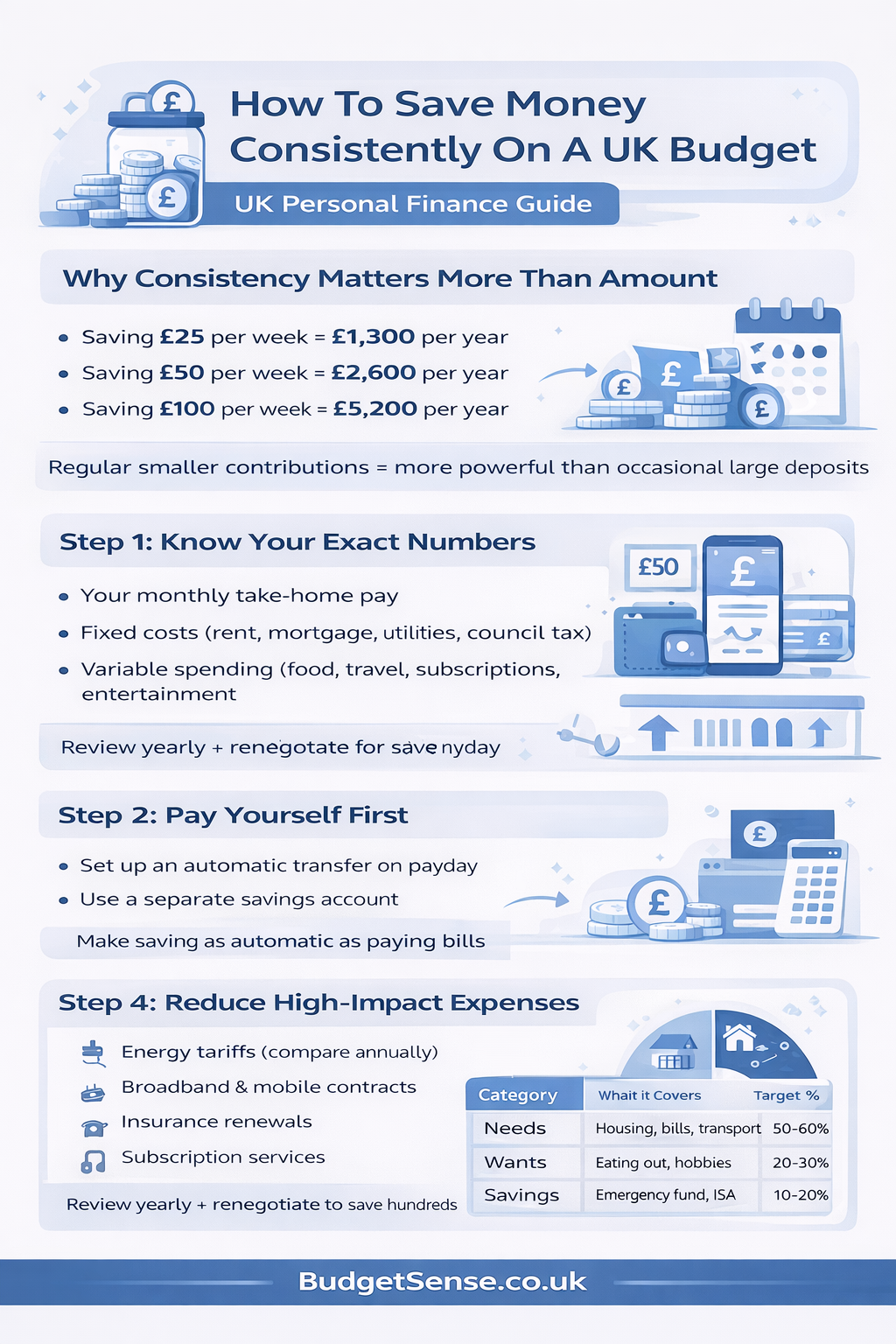
Why Consistency Matters More Than Amount
Many people believe they need to save large amounts to make a difference. In reality, regular smaller contributions are more powerful than occasional large deposits.
For example:
- Saving £25 per week = £1,300 per year
- Saving £50 per week = £2,600 per year
- Saving £100 per week = £5,200 per year
The key to mastering how to save money consistently on a UK budget is automation and structure — not willpower alone.
Step 1: Know Your Exact Numbers
You cannot save consistently without clarity. Start by calculating:
- Your monthly take-home pay
- Fixed costs (rent, mortgage, utilities, council tax)
- Variable spending (food, travel, subscriptions, entertainment)
If you haven’t already built a spending plan, read our Ultimate Guide To Budgeting UK to create a structure first.
Once you know your numbers, identify a realistic monthly saving target — even if it’s just £50 to start.
Step 2: Pay Yourself First
The most effective way to save money consistently on a UK budget is to treat savings like a bill.
Instead of saving what’s left at the end of the month (which is often nothing), move money to savings immediately after payday.
- Set up an automatic transfer on payday
- Use a separate savings account
- Consider an easy-access ISA for tax-free interest
This removes the temptation to spend first and save later.
Step 3: Reduce High-Impact Expenses
If your budget feels tight, focus on large recurring expenses rather than cutting small treats.
Areas to review:
- Energy tariffs (compare annually)
- Broadband and mobile contracts
- Insurance renewals
- Subscription services
Even reducing bills by £40–£60 per month creates £480–£720 in annual savings without changing your lifestyle significantly.
Step 4: Use the 50/30/20 Framework (Adapted for the UK)
| Category | What It Covers | Target % |
|---|---|---|
| Needs | Housing, bills, food, transport | 50–60% |
| Wants | Eating out, hobbies, streaming | 20–30% |
| Savings | Emergency fund, ISA, investments | 10–20% |
Adjust these percentages to your reality — London renters may have higher housing costs, for example. The aim is balance, not perfection.
Step 5: Build a Starter Emergency Fund
Before investing, focus on stability.
Aim for:
- £500 starter emergency fund initially
- Then 3–6 months of essential expenses
This prevents unexpected costs (car repairs, dental bills, appliance breakdowns) from pushing you into debt.
Step 6: Make Saving Effortless
The easier saving feels, the more likely you’ll stick with it.
- Round-up banking features that save spare change
- Direct debit into savings every payday
- Separate accounts for goals (holiday, house deposit, Christmas)
If you’re a student or young adult, you may also benefit from our guide to the Best Student Savings App UK for Teens & Uni Students.
Common Mistakes That Stop People Saving
- Waiting until income increases before starting
- Saving inconsistently
- Keeping savings in the same account as spending money
- Not reviewing progress monthly
Remember: saving consistently is about systems, not motivation.
How Long Does It Take To See Results?
If you save £200 per month consistently:
- After 6 months: £1,200
- After 12 months: £2,400
- After 3 years: £7,200 (before interest)
Small monthly habits create long-term financial breathing room.
Conclusion
Learning how to save money consistently on a UK budget isn’t about extreme frugality. It’s about structure, automation and realistic targets. Start small, automate your savings, reduce high-impact bills and review progress monthly.
The earlier you begin, the easier it becomes. Take action today — set up your first automatic transfer and start building financial security one month at a time.