Student Savings Accounts UK: Best Options (October 2026)
 By Matthew Harman — Matthew has been navigating UK personal finance for over 30 years, from first mortgages to ISA strategies, and founded BudgetSense to share what actually works.
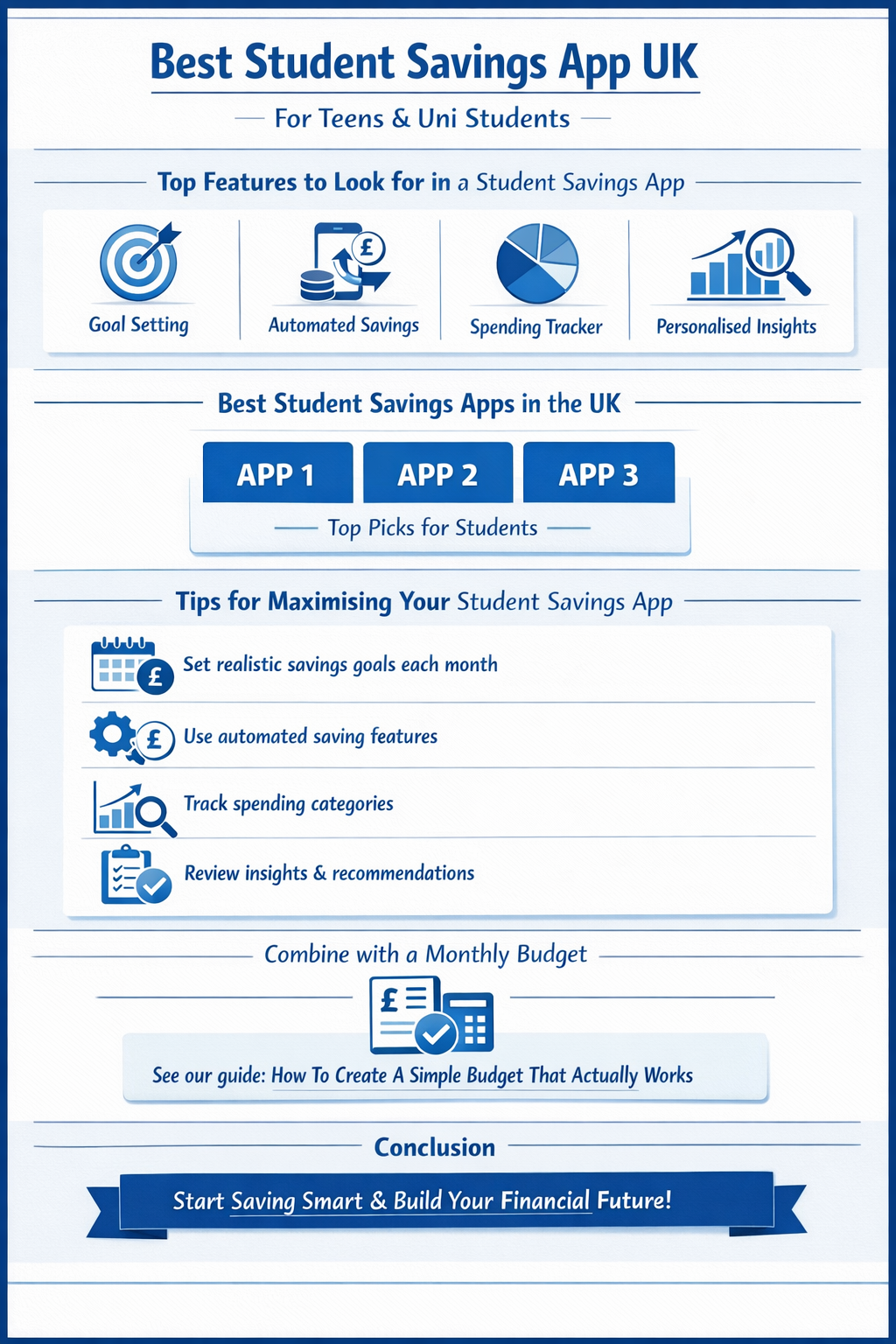
Visual summary of key points from 'Student Savings Accounts UK: Best Options (October 2026)'
Essential UK Budgeting & Personal Finance Guides for 2026
Discover practical tips, tools, and strategies to manage your money, save effectively, and stay on top of your finances.
Check out our key articles: How to Create a Simple Budget, How to Save £500 in 3 Months, Understanding Credit Scores in the UK.
Student Savings Accounts UK: What's Actually Worth Using (October 2026)
Last updated: 30 October 2026. Rates checked 30 October 2026.
Very few savings accounts are truly student-only. In practice, UK students use one of three things: a regular saver linked to their bank, an easy-access account for money they might need, or an app that automates the habit. This guide shows what each pays right now, what the catches are, and which suits you.
By Matthew Harman, founder of BudgetSense. Rates are taken from comparison-site listings (Moneyfactscompare and Deposit Scout) on the dates shown and change often, so always confirm the current rate and terms on the provider's own website before opening an account. This is general information, not financial advice (read our disclaimer).
The short answer
- If you bank with Santander (or are happy to open an account there): its Regular Saver is currently one of the highest-paying savings accounts in the UK, but only for small monthly amounts.
- If you have a lump sum, such as part of your maintenance loan: an easy-access account paying around 4.5% is the sensible home for it. Check whether the rate includes a bonus that will end.
- If you struggle to save at all: an automatic saving app is worth trying. The habit matters more than the rate at this stage.
Student savings accounts compared (checked 30 October 2026)
| Account | Type | Rate (AER) | What to know |
|---|---|---|---|
| Santander Regular Saver | Regular saver | 8.00% variable (includes a 5.00% bonus for 12 months) | Needs a Santander current account. Maximum £200 a month. You can only move money back into your Santander current account. |
| Zopa Limited Access pot | Easy access | 4.56% (includes a 1.05% bonus for 12 months) | Opens from £1. The bonus ends after 12 months, so check the rate then. |
| Chase Saver | Easy access | 4.50% variable (as listed 27 October) | Opens from £1 in the Chase app. Rate shown for new customers. |
Important: savings rates change frequently, and "includes a bonus" means part of the rate is temporary. At the very top of the easy-access market, a 5.00% headline rate includes a bonus that lasts only six months. Lloyds Bank and Bank of Scotland also launched 8% monthly savers in July with a £250 monthly limit, so it's worth checking whether you're eligible and whether they are still open.
Why the 8% isn't as big as it looks
A regular saver only pays interest on the money that's actually in the account, and that builds up slowly. Paying in the maximum £200 every month into an 8% account earns about £104 over the year on £2,400 saved. The same £200 a month in a 4.5% easy-access account earns about £58. The regular saver wins, but the difference is about £46, so don't contort your finances to get it.
What to look for in any account
- Access: can you take money out without losing interest? Some regular savers cut the rate if you withdraw; Santander's lets you withdraw without a penalty, but check the terms of whichever you choose.
- Bonus rates: note when any bonus ends and set a phone reminder to move your money.
- FSCS protection: deposits at UK banks and building societies are protected up to £120,000 per person, per banking licence. The limit was £85,000 until 1 December 2025, so older guides often have it wrong. Check that your provider is covered before depositing.
- Minimum deposit: most of the accounts above open from £1, which suits students starting from nothing.
What to do with your maintenance loan
If your loan arrives in termly instalments, there's usually a stretch when you're holding money you won't need for weeks or months. Say £1,500 isn't needed until January. In an easy-access account at 4.5% AER, three months of interest comes to roughly £17. It's a small amount, but it's free money for doing very little. A simple routine:
- When the instalment lands, move what you won't need this month into an easy-access account.
- Set up a standing order back to your current account for your weekly or monthly spending money.
- Keep an emergency buffer of at least a few hundred pounds in the savings account that you don't spend.
For more ideas on building a saving routine on a tight budget, see our guide on how to save £500 in 3 months.
Do students pay tax on savings interest?
Almost never. Interest is covered by three separate allowances for 2026/27:
- Your Personal Allowance of £12,570 applies to all your income, including interest.
- The starting rate for savings gives you up to £5,000 of interest at 0% if your other income (wages, for example) is below £17,570.
- The Personal Savings Allowance covers up to £1,000 of interest for basic-rate taxpayers.
A student with a small part-time income and a few thousand pounds in savings will be nowhere near these limits.
Savings apps for students
Savings apps link to your current account and automate the habit, usually through round-ups or small automatic transfers. Plum and Chip are two popular examples, and Monzo's round-up feature sweeps spare change into a savings pot. They aren't a substitute for choosing a good account: the app does the behavioural work, and the account earns the interest. Before moving a larger sum into any app, check who holds your money, what protection applies, and what rate you'll actually receive once any bonus ends.
Frequently asked questions
- Can I open a savings account as a student with no income? Yes. Savings accounts don't require an income, but each provider has its own age and eligibility rules (many start at 16 or 18), and some, like regular savers, require you to hold the provider's current account.
- Do students pay tax on savings interest? Rarely. The £12,570 Personal Allowance, a starting rate for savings of up to £5,000 if your other income is under £17,570, and the £1,000 Personal Savings Allowance mean most students pay no tax on their interest.
- Is my money safe in a savings account or app? UK banks and building societies are covered by the Financial Services Compensation Scheme (FSCS) up to £120,000 per person, per banking licence. Apps vary, so check the provider's protection arrangements before depositing a large amount.
- Should I use a Cash ISA as a student? Usually not. ISA interest is tax-free, but most students already pay no tax on interest, so the wrapper adds little. Choose the best rate and terms first.
- What if I need to take money out of a regular saver? It depends on the account. Some allow withdrawals without a penalty and some reduce the interest rate or limit withdrawals, so read the terms before you open one.