UK Tax Refund Guide
 By Matthew Harman — Matthew has been navigating UK personal finance for over 30 years, from first mortgages to ISA strategies, and founded BudgetSense to share what actually works.
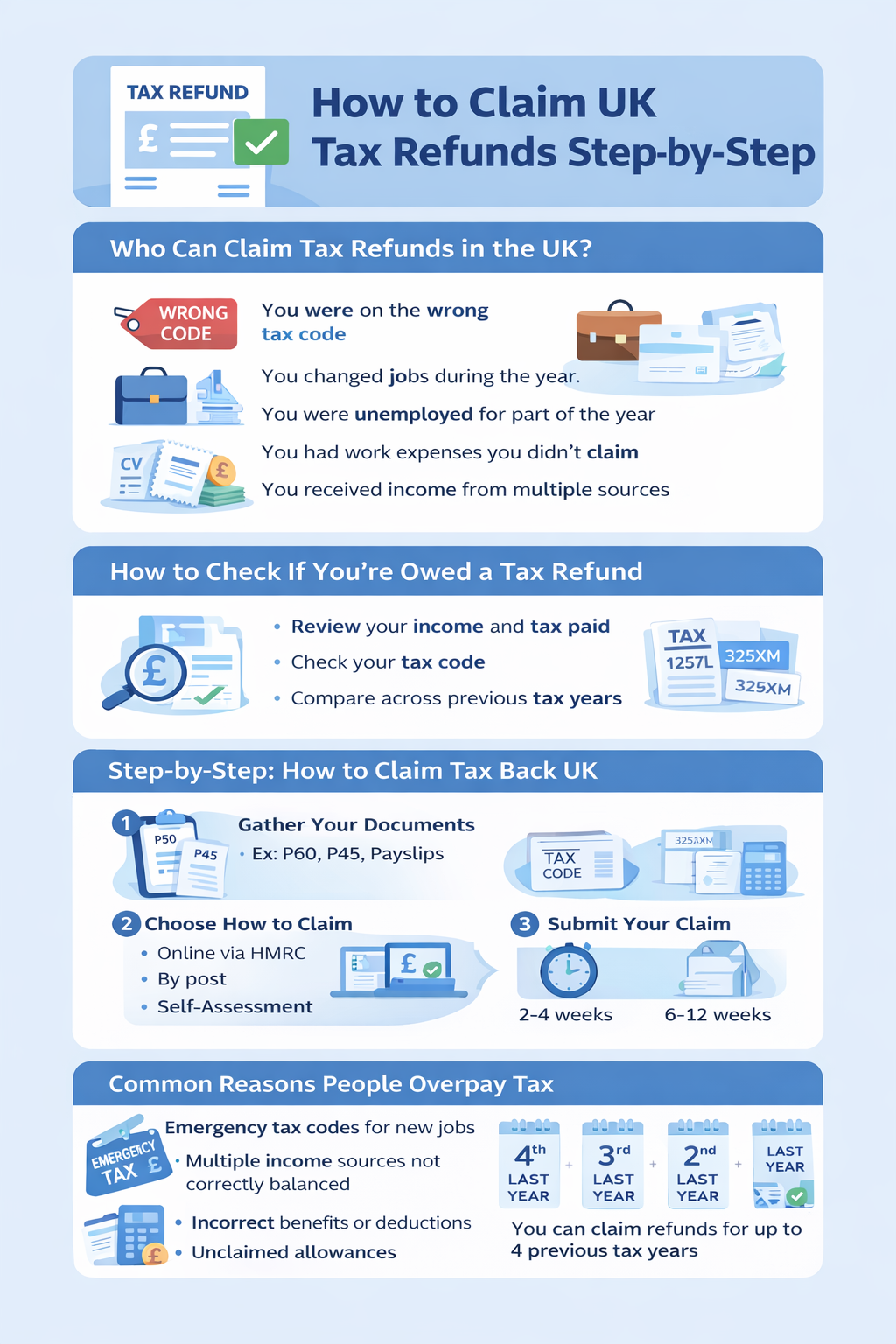
Visual summary of key points from 'UK Tax Refund Guide | BudgetSense'
Essential UK Budgeting & Personal Finance Guides for 2026
Discover practical tips, tools, and strategies to manage your money, save effectively, and stay on top of your finances.
Check out our key articles: How to Create a Simple Budget, How to Save £500 in 3 Months, Understanding Credit Scores in the UK.
How to Claim UK Tax Refunds Step-by-Step
Claiming tax refunds UK is something far more people are entitled to than actually realise. Every year, millions of pounds go unclaimed simply because people assume their tax is automatically correct. In reality, mistakes, overpayments, and missed allowances happen all the time.
This guide walks you through exactly how to claim tax back UK taxpayers are owed — step by step. Whether you're employed, self-employed, or have multiple income sources, this HMRC refund guide will help you understand when you’re due money and how to get it back.
Who Can Claim Tax Refunds in the UK?
You may be eligible for tax refunds UK if you've paid too much tax during a tax year. This can happen for a number of reasons, many of which are surprisingly common.
- You were on the wrong tax code
- You changed jobs during the year
- You were unemployed for part of the year
- You had work expenses you didn’t claim
- You received income from multiple sources
Even small discrepancies can add up. It’s not unusual for refunds to range from £100 to over £1,000 depending on your situation.
To understand how allowances affect your eligibility, it’s worth reading our Ultimate Guide to UK Tax Allowances for Individuals.
How to Check If You’re Owed a Tax Refund
Before you claim, you need to confirm whether you’re actually due money back.
Check Your PAYE Records
If you’re employed, your employer deducts tax through PAYE. You can check your records via your Personal Tax Account on the HMRC website.
- Review your income and tax paid
- Check your tax code
- Compare across previous tax years
Look at Your P60 or P45
These documents summarise how much tax you've paid during the year and are essential for spotting overpayments.
Check for Work Expenses
If you’ve paid for job-related costs (uniforms, tools, travel), you may be able to claim tax relief — increasing your refund.
Step-by-Step: How to Claim Tax Back UK
Once you’ve confirmed you’re due a refund, here’s how to claim it.
Step 1: Gather Your Documents
- P60 or P45
- Payslips
- Details of expenses
- Bank account information
Having everything ready makes the process much quicker.
Step 2: Choose How to Claim
You have a few options when claiming tax refunds UK:
- Online via HMRC — fastest method
- By post — using relevant forms (e.g. P50, P87)
- Self Assessment — if you already complete a tax return
For most employees, using the HMRC online system is the easiest route.
Step 3: Submit Your Claim
Follow the instructions based on your method. Make sure all information is accurate to avoid delays.
Step 4: Wait for HMRC to Process
Typical processing times:
- Online claims: 2–4 weeks
- Postal claims: 6–12 weeks
Refunds are usually paid directly into your bank account or sent as a cheque.
Common Reasons People Overpay Tax
Understanding why overpayments happen can help you avoid them in future.
- Emergency tax codes when starting a new job
- Multiple income sources not correctly balanced
- Incorrect benefits or deductions
- Unclaimed allowances
Many of these link back to not fully using your allowances. If you haven’t already, read the UK Tax Allowances Guide to make sure you're not overpaying in the first place.
How Far Back Can You Claim?
One of the most useful parts of the system is that you can backdate claims.
- You can claim refunds for up to 4 previous tax years
That means if you’ve been overpaying without realising, you could be owed a lump sum covering several years.
Tips to Maximise Your Tax Refund
If you want to get the most out of your claim, keep these tax tips UK taxpayers often overlook in mind:
- Claim all allowable work expenses
- Check marriage allowance eligibility
- Review pension contributions
- Ensure your tax code is correct
These small checks can significantly increase your refund amount.
Avoid Using Refund Companies
Many third-party companies offer to claim refunds on your behalf — but often take a large percentage (sometimes 20–40%).
You can complete the same process yourself for free using HMRC.
Conclusion
Claiming tax refunds UK doesn’t need to be complicated. In most cases, it’s simply a matter of checking your records, identifying an overpayment, and submitting a claim through HMRC.
Start by reviewing your last tax year today — especially if you’ve changed jobs, had gaps in employment, or incurred work-related expenses.
For a broader understanding of how to reduce your tax bill going forward, read our Ultimate Guide to UK Tax Allowances for Individuals, and if you're improving your overall financial position, don’t miss our guide on How to Improve Your Credit Score in the UK.