How to Save for a House Deposit on a Normal UK Salary
 By Matthew Harman — Matthew has been navigating UK personal finance for over 30 years, from first mortgages to ISA strategies, and founded BudgetSense to share what actually works.
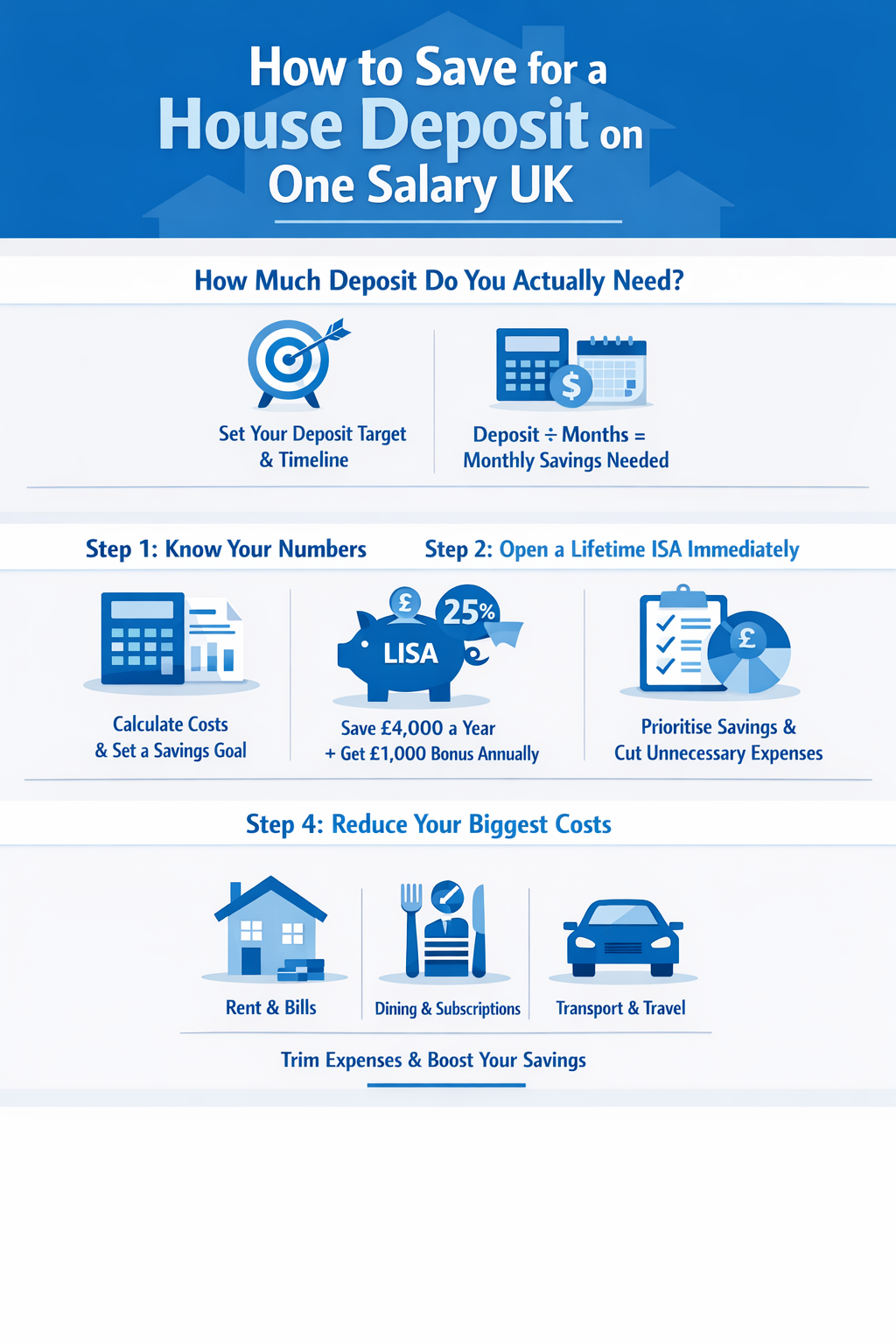
Visual summary of key points from 'How to Save for a House Deposit on a Normal UK Salary | BudgetSense'
Essential UK Budgeting & Personal Finance Guides for 2026
Discover practical tips, tools, and strategies to manage your money, save effectively, and stay on top of your finances.
Check out our key articles: How to Create a Simple Budget, How to Save £500 in 3 Months, Understanding Credit Scores in the UK.
How to Save for a House Deposit on One Salary UK
Last updated: September 2026
Let's be honest — trying to save for a house deposit on one salary in the UK right now feels like trying to fill a bath with the plug out. Rents have risen sharply across most of the country, energy bills are still elevated, and according to ONS data, the average UK house price sits at around £285,000. It's genuinely tough out there.
But on an average UK salary, it is absolutely still possible - and this guide shows you exactly how.
But I want you to hear this clearly: it is still absolutely possible to save for a house deposit on a single income. I've spent over 30 years helping people get to grips with their finances, and I've seen first-hand that the difference between those who get there and those who don't rarely comes down to income alone. It comes down to having a clear, consistent plan — and sticking to it.
This guide gives you exactly that. Practical, specific steps to save for a house deposit in the UK, even if you're doing it on your own.
By the end, you'll know how to:
- Set a realistic deposit target and timeline
- Use government schemes to boost your savings
- Cut costs in the places that actually make a difference
- Keep your savings growing in the right accounts
- Stay on track for the long haul
How Much Deposit Do You Actually Need?
Before you can build a plan, you need a target. And the answer to "how much deposit for a house UK" is more nuanced than most people expect.
The minimum deposit accepted by most UK mortgage lenders is 5% of the property value. On a £200,000 home, that's £10,000. On a £250,000 home, it's £12,500. But putting down 10% or more unlocks better mortgage rates, which reduces both your monthly repayments and the total interest you pay over the life of the loan.
| Property Value | 5% Deposit | 10% Deposit | 15% Deposit |
|---|---|---|---|
| £150,000 | £7,500 | £15,000 | £22,500 |
| £200,000 | £10,000 | £20,000 | £30,000 |
| £250,000 | £12,500 | £25,000 | £37,500 |
| £300,000 | £15,000 | £30,000 | £45,000 |
One thing people regularly underestimate is the cost of buying beyond the deposit itself. Solicitor fees, a survey, and Stamp Duty can easily add £2,000–£5,000 to what you need ready on completion day. First-time buyers in England currently benefit from Stamp Duty relief on purchases up to £425,000 — check the current thresholds on the HMRC website, as these are subject to change.
As a rule of thumb, add a 5–10% buffer on top of your deposit target to cover these additional costs. Better to have it and not need it than to be caught short on moving day.
Step 1: Know Your Numbers
The foundation of any successful savings plan is understanding your current financial position. That means sitting down and working out your monthly take-home pay, what you're currently spending, and — crucially — how much is actually left over at the end of each month.
If you haven't already, track every penny you spend for a full month. I know it sounds tedious, but it's genuinely eye-opening. Most people discover they're spending more than they realised in one or two areas — whether that's takeaways, subscriptions, or impulse purchases online. Once you can see clearly where your money goes, you can make intentional decisions about redirecting it.
From there, set a specific savings target with a timeline attached. Vague goals rarely get achieved. "Save for a deposit" is a wish. "Save £20,000 in four years" is a plan. Work backwards:
- Deposit target ÷ number of months = monthly savings needed
If the monthly figure feels out of reach, you can either extend your timeline or find ways to increase what you can set aside each month — more on both shortly.
Step 2: Open a Lifetime ISA Immediately
If you're between 18 and 39 and buying your first home, a Lifetime ISA is the single most valuable tool available to you. Having remortgaged twice myself over the years, I wish something like this had existed when I was starting out — the government bonus alone is remarkable.
Here's how it works:
- Save up to £4,000 per year into a Lifetime ISA
- The government adds a 25% bonus — that's up to £1,000 free every year
- Use it towards a first home worth up to £450,000
- All interest and growth is completely tax-free
Over five years, that's a potential £5,000 in government bonuses on top of your own savings. On a single salary, that kind of boost can shave a year or more off your timeline.
The key rules to understand: you must be a first-time buyer, the property must be £450,000 or under, and withdrawing for any purpose other than a first home or retirement before age 60 incurs a withdrawal charge that wipes out the bonus. Used correctly, it is a no-brainer. To see how it fits alongside other options, take a look at my guide to the Best ISAs for UK Savers in 2026.
Providers worth comparing include Moneybox, Nutmeg, and several building societies. Rates vary, so it's worth shopping around.
Step 3: Build a Deposit-Focused Budget
Once you know your monthly savings target, build your entire budget around it. Treat your deposit savings like a non-negotiable bill — it leaves your account on payday, before you have the chance to spend it. Set up a standing order the morning after your salary lands, directed straight into your Lifetime ISA or savings account. This is one of the most effective first time buyer saving tips I know, and it costs nothing to implement.
A practical framework for a single-salary deposit saver might look like this:
| Category | Suggested % of Take-Home Pay |
|---|---|
| Essentials (rent, bills, groceries, transport) | 50–60% |
| House deposit savings | 15–20% |
| Lifestyle and discretionary spending | 15–20% |
| Emergency fund / other savings | 5–10% |
If your rent is high — and in many parts of the UK it will be — essentials may eat up more than 60%. That's okay. The principle still holds: savings come first, then you manage what's left. For more on building a budget that actually sticks, read my guide on How to Save Money Consistently on a UK Budget.
Step 4: Reduce Your Biggest Costs
Small savings on coffee are nice, but the real gains come from tackling the larger numbers. On a single salary, this is where your time and energy will have the most impact.
Rent
Rent is almost certainly your biggest outgoing. If there's any flexibility, consider whether moving somewhere slightly cheaper, taking on a flatmate, or temporarily living with family could meaningfully accelerate your timeline. I know the latter isn't possible or desirable for everyone, but if it saves you £600 a month, that's £7,200 a year going into your deposit fund instead of your landlord's pocket.
Energy and Bills
Make sure you're on the best available tariff. Spending an hour on a price comparison site reviewing your energy, broadband, and mobile contract can save hundreds of pounds a year. According to MoneySavingExpert, households routinely save £100–£300 annually just by switching — it's one of the easiest wins available.
Groceries
Switching from a premium supermarket to Aldi or Lidl can reduce a typical weekly shop by 20–30% without meaningful sacrifice. Which? regularly publishes supermarket price comparisons that are worth a look. Add meal planning and reduced food waste, and you can cut your grocery bill further still.
Subscriptions
Go through three months of bank statements and list every subscription you pay. Cancel anything you don't actively use at least once a week. It's not unusual to find £30–£60 a month disappearing into forgotten services.
Step 5: Boost Your Income Where You Can
Cutting costs gets you so far. Increasing your income accelerates things significantly.
Options worth exploring include:
- Asking for a pay rise or taking on additional responsibilities at work
- Freelance or self-employed work in evenings or at weekends
- Selling items you no longer need on Vinted, eBay, or Facebook Marketplace
- Using cashback sites and rewards credit cards for everyday spending you'd make anyway
Even an extra £200 per month directed straight into your deposit fund adds up to £2,400 a year — and over a four-year saving period, that's £9,600 before interest or government bonuses. It all compounds.
Step 6: Keep Your Savings in the Right Place
Your deposit savings should be earning interest while you build them. Don't leave them in a standard current account.
Beyond the Lifetime ISA, good options include:
- Cash ISA — tax-free interest, useful for savings above the LISA limit
- High-interest savings accounts — challenger banks and building societies frequently offer the most competitive rates; MoneyHelper's savings comparison tool is a good starting point
- Regular saver accounts — some high street banks offer above-average rates for customers who deposit a set amount each month
With interest rates higher than they've been for many years, the difference between a well-chosen account and a poorly chosen one can run to several hundred pounds annually. It's worth an hour of your time.
Step 7: Build a Small Emergency Fund Too
Here's something that catches a lot of deposit savers out. They save hard, an unexpected cost appears — a car repair, a broken boiler, a dental bill — and they're forced to raid their deposit fund. It's demoralising, and it sets you back further than just the amount withdrawn, because you also lose momentum.
Before pushing hard on deposit savings, set aside at least £500–£1,000 as an emergency buffer. MoneyHelper recommends working towards three months' worth of essential expenses eventually, but even a modest cushion is enough to protect your deposit fund from everyday surprises.
Government Schemes Worth Knowing About
Beyond the Lifetime ISA, a handful of other schemes may be relevant depending on your circumstances.
Shared Ownership
Shared Ownership allows you to purchase a share of a property — typically between 25% and 75% — and pay rent on the remainder. This means you need a smaller deposit and a smaller mortgage, making homeownership more accessible on a single income. You can increase your share over time through a process called staircasing.
First Homes Scheme
The First Homes Scheme offers newly built properties to first-time buyers at a discount of at least 30% below market value. Availability varies by area and there are income caps, but it's worth checking whether any developments near you participate in the scheme.
Mortgage Guarantee Scheme
This scheme enables buyers to purchase with a 5% deposit by providing a government guarantee to mortgage lenders, encouraging them to offer 95% loan-to-value mortgages. It makes lower-deposit purchases more accessible and has been extended several times — check its current status on the government's website.
Frequently Asked Questions
How much deposit do I need for a house in the UK?
The minimum deposit required by most UK mortgage lenders is 5% of the purchase price. However, a 10% deposit typically gives you access to better mortgage rates, reducing your monthly repayments and the total cost of borrowing over time. Don't forget to budget for additional purchase costs — solicitor fees, a survey, and any applicable Stamp Duty — which can add several thousand pounds on top of your deposit.
How long does it take to save a house deposit on an average UK salary?
Based on ONS figures, median full-time earnings in the UK are around £35,000, giving a monthly take-home pay of roughly £2,300–£2,400 after tax and National Insurance. Saving 15–20% of that each month, combined with the Lifetime ISA government bonus, most single-salary savers can realistically build a 5–10% deposit within three to five years. Location flexibility — particularly considering more affordable regions outside London and the South East — can significantly shorten that timeline.
Is a Lifetime ISA worth using for a house deposit?
For most eligible first-time buyers, yes — the Lifetime ISA is one of the best savings tools available in the UK. The 25% government bonus, worth up to £1,000 per year, gives you a guaranteed return on your contributions before interest is even factored in. The key conditions are that you must be a first-time buyer, aged between 18 and 39, and purchasing a property priced at £450,000 or under.
Final Thoughts
Saving for a house deposit on one salary is not easy. I won't pretend otherwise. But it is absolutely achievable with a clear target, the right accounts, and a budget you can actually live with — not one that makes you miserable.
Start this week with three things: calculate your deposit target, open a Lifetime ISA if you haven't already, and set up an automatic transfer on payday. Those three steps alone put you ahead of most people.
For more on keeping your savings consistent month after month, read my guide on How to Save Money Consistently on a UK Budget.